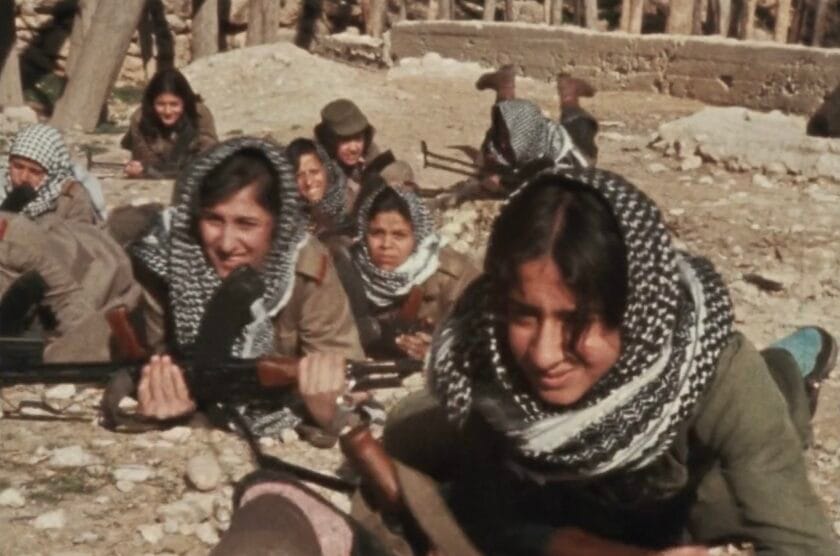
Les Femmes Palestiniennes (Palestinian Women)
<h2>Synopsis</h2> <p>Palestinian women, the often-forgotten victims of the war, are here given a voice by Jocelyne Saab.</p> <h2>About the Director</h2> <p>Jocelyne Saab was born in 1948, the year of the Nakba, in a very diverse neighborhood of West Beirut, where Muslims, Kurds, and Lebanese Christians lived side by side. In 1968, at university, she discovered the reality of the Palestinian refugee camps. Despite her desire to make films, she studied Palestinian armed groups and gained their trust. She was the first journalist to document a Palestinian training camp and the first to report on the practice of suicide commandos.</p> <p>Her film, The Front of Refusal (1975), was a work that helped launched her film career. She continued to cover the conflict until the Israeli invasion of Lebanon in 1982 and the siege of West Beirut, documenting key moments and interviewing PLO leaders. During the siege, Saab remained in Beirut and made Beirut, My City (1982), a political ode to life that documented the Israeli occupation of Beirut and the despair of the Palestinians’ departure, which marked the end of their presence in the city. Yasser Arafat personally asked her to document his departure from Lebanon aboard the Atlantis, the ship that took him to Greece. The Ship of Exile (1982) is the cinematic record of these events, and was the last documentary she made in Beirut.</p>
Directors: Jocelyne Saab
Copyright: Association Jocelyne Saab
Production Country: France
Part of: Special Collection: Cinelogue